
Ukrainian prisons, ECHR judgments, and Europe’s crisis of trust in justice
On detention conditions, selective justice, extradition refusals, and the point at which European courts begin to say “no” to Ukraine.
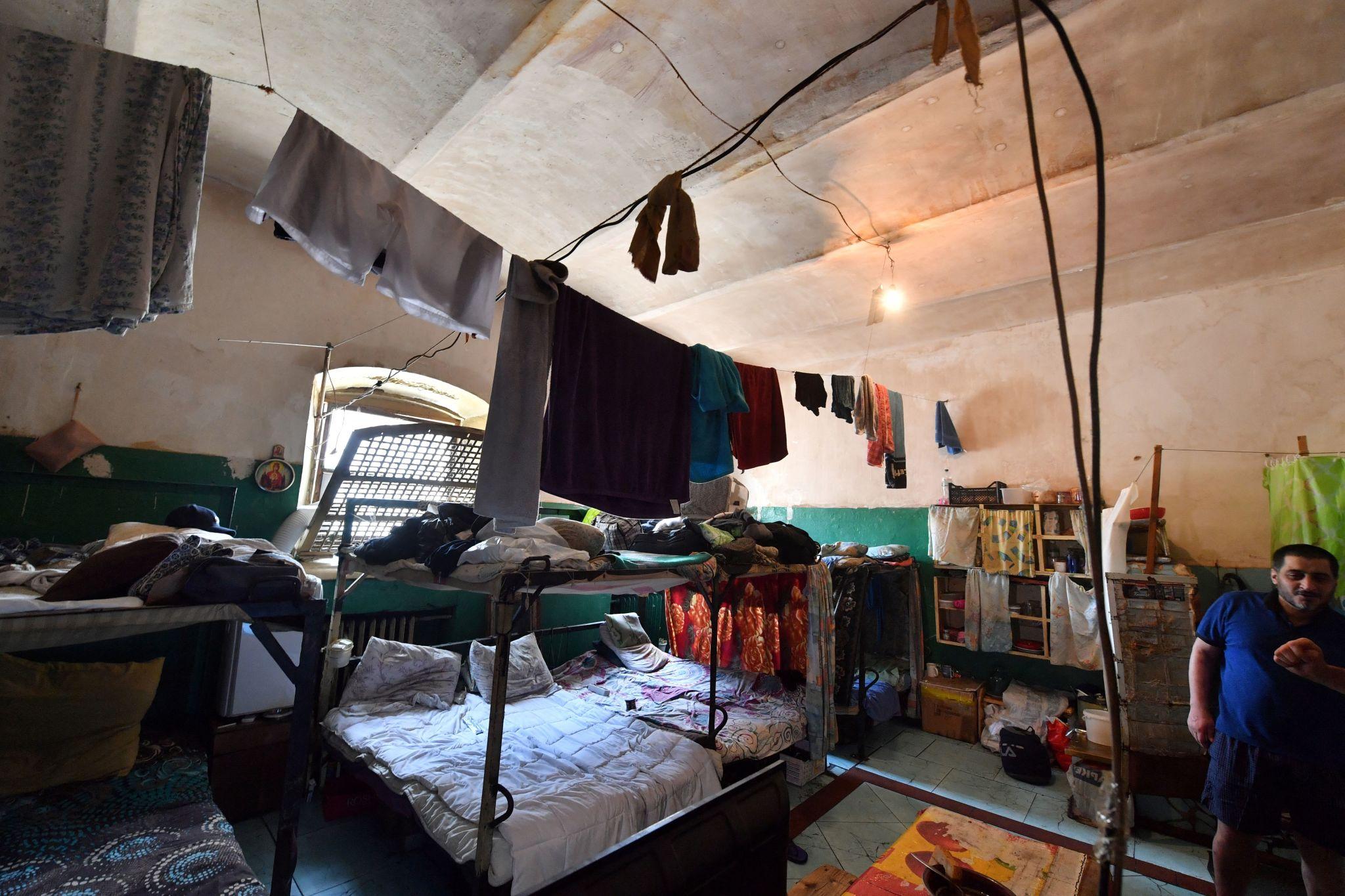
In Europe, law is not merely a declaration. It is not a political slogan, nor a diplomatic promise. It is a system of verification — one that operates regardless of sympathy, geopolitics, or historical circumstance.
And it is through this system that Ukraine is now being tested.
Not through statements about its European future. Not through speeches about values. But through concrete judicial decisions: extradition cases, judgments of the European Court of Human Rights, and reports by the United Nations, Amnesty International, Human Rights Watch, and other international organizations.
Together, these sources form a complex picture. It is not black and white. Ukraine is at war. It is defending itself. It is paying an extraordinary price for its independence. Yet this makes the question of law even more important. A state fighting for a European future cannot afford to preserve Soviet reflexes inside its criminal justice system.
The central problem is not only individual violations. The deeper problem is trust.
European courts are increasingly asking whether Ukraine can genuinely guarantee that a person extradited to its jurisdiction will not face torture, inhuman treatment, politically or selectively motivated prosecution, an unfair trial, or unacceptable detention conditions.
When the answer is uncertain, Europe chooses caution.
A legacy that did not disappear
Ukraine’s criminal justice system did not emerge in a vacuum. It inherited much from the Soviet model, in which confession was treated as the “queen of evidence,” law enforcement bodies dominated the process, and courts often played a formal rather than genuinely supervisory role.
This model did not vanish on August 24, 1991. It changed its language, institutional names, and procedural forms. But parts of its inner logic survived independence.
In 1997, Ukraine ratified the European Convention on Human Rights. From 1998 onward, Ukrainian citizens gained access to the European Court of Human Rights.
That marked the beginning of a new era — an era of external legal scrutiny.
And that scrutiny soon revealed that the problem was not merely one of isolated abuses. It was one of recurring practice.
The ECHR: a record of systemic violations
Since the early 2000s, the European Court of Human Rights has delivered hundreds of judgments against Ukraine. Many of them concern criminal justice: ill-treatment, poor detention conditions, unlawful detention, lack of effective investigation, and violations of the right to a fair trial.
In Nevmerzhitsky v. Ukraine, the Court found that the applicant’s forced feeding amounted to torture.
In Yakovenko v. Ukraine, the Court identified problems related to medical assistance and detention conditions.
In Kaverzin v. Ukraine, the ECHR referred to a “systemic problem of ill-treatment by law enforcement.”
This phrase matters. It means that the issue is not accidental. It is not about one abusive investigator or one isolated mistake. It is about a system.
In Ignatov v. Ukraine, the Court also found that detention had not been properly justified.
Each of these judgments is more than a legal document. It is part of a broader record that now influences courts in other European countries.
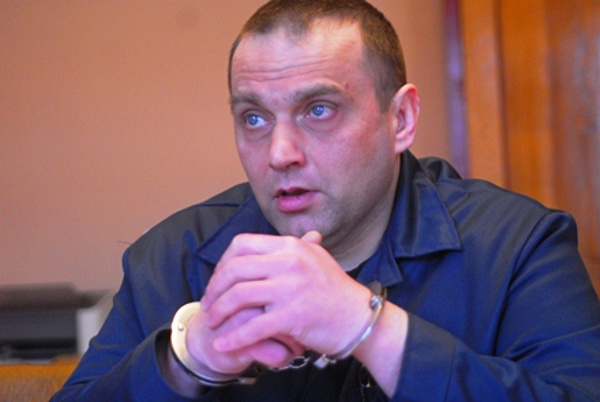
Oleksandr Rafalskyi: the human face of the system
Behind legal formulas stand human lives. One such life is the case of Oleksandr Rafalskyi.
His name has become associated with a familiar pattern in post-Soviet criminal justice: prolonged detention, allegations of coerced confession, questionable evidence, and years spent waiting for justice.
Such cases matter not only individually. They help form the background against which international courts assess Ukraine.
When a European judge considers whether to extradite a person to Ukraine, that judge does not read diplomatic assurances in isolation. They also see ECHR case law, reports by international organizations, allegations of torture, cases concerning detention conditions, and personal stories of people who claim to have been crushed by the system.
That context can become decisive.
International reports: restrained language, severe meaning
International organizations usually speak carefully. Their language is measured. It does not shout; it formulates. But behind these formulations there is often a severe reality.
Reports by the Office of the United Nations High Commissioner for Human Rights on Ukraine are available here:
https://ukraine.ohchr.org
Amnesty International has repeatedly addressed issues concerning fair trial rights, treatment of detainees, martial law, and criminal prosecution in Ukraine.
https://www.amnesty.org/en/location/europe-and-central-asia/ukraine/report-ukraine/
Human Rights Watch regularly analyzes the human rights situation, institutional weaknesses, wartime conditions, and risks of abuse.
https://www.hrw.org/world-report
These reports do not always produce simple headlines. But they shape the legal atmosphere. And in extradition cases, atmosphere matters.
A court does not assess only what a state promises. It assesses whether there are reasons to trust those promises.
Extradition as the moment of truth
When it comes to extradition, abstract assessments become concrete judicial decisions. European courts must answer a simple question: may a person be surrendered to a state if there is a real risk that their fundamental rights will be violated?
The classic standard was formulated in Soering v. United Kingdom.
https://hudoc.echr.coe.int/eng?i=001-57619
In that case, the European Court of Human Rights established that extradition is impermissible where there is a real risk of inhuman or degrading treatment.
This principle is now applied to many countries, including Ukraine.
In 2023, extradition to Ukraine was discussed in the context of EU and national judicial practice. One important document concerns the assessment of risks related to extradition.
Finnish courts have also considered extradition to Ukraine in light of detention conditions and Article 3 of the Convention.
German courts have traditionally required individual assurances regarding detention conditions, medical care, and procedural rights. But the key problem is this: guarantees on paper do not automatically create trust in practice.
This is where the crisis begins.
Selective justice: when law becomes an instrument
Another sensitive issue is selective justice. This does not always mean that a case is openly political. Often the reality is more complex.
Selective justice appears when the law is applied unevenly. When some cases remain dormant for years while others suddenly become urgent. When criminal proceedings become a tool of pressure. When an investigation looks less like a search for truth and more like a continuation of conflict by legal means.
This is especially sensitive in cases involving business figures, political opponents, civil society actors, and corruption whistleblowers.
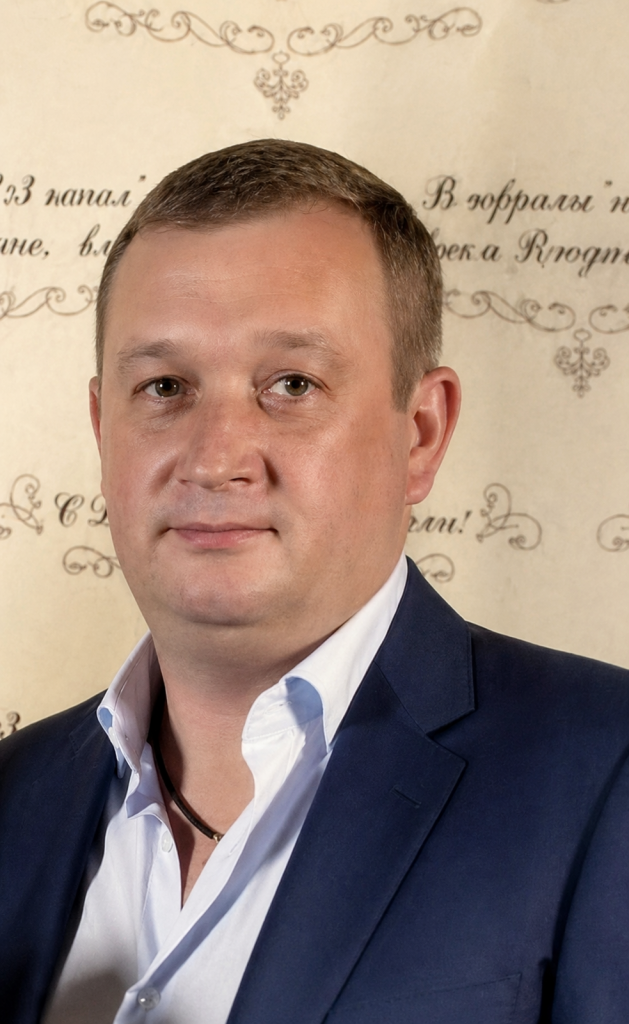
The Yevdokymov case: the logic of systemic retaliation
In this context, the case of Oleksandr Yevdokymov and others who present themselves as whistleblowers exposing corruption within law enforcement deserves attention.
The pattern often looks familiar: a person reports corruption, enters into conflict with the system, and then faces criminal proceedings, international search measures, or extradition attempts.
This does not automatically prove political motivation. But extradition law does not always require a person to prove a future violation with certainty. It is often enough to demonstrate a real risk.
If a person can credibly argue that prosecution is linked to whistleblowing, conflict with law enforcement bodies, or retaliation for a public position, a European court is obliged to examine those risks.
This is the essence of the European approach: when fundamental rights are at stake, doubt must be taken seriously.
War and law: is there an excuse?
War creates extraordinary circumstances. It overloads institutions, strengthens the role of security bodies, restricts certain rights, and changes the balance between liberty and security.
But Article 3 of the European Convention on Human Rights admits no compromise. The prohibition of torture and inhuman or degrading treatment is absolute.
This is one of the core principles of European law: even war does not allow a state to torture, humiliate, or create conditions that physically or psychologically destroy a person.
War may explain the complexity of the situation. It cannot fully justify violations.
The philosophy of European law
European law is built around the idea of limits.
The state has power: police, prosecutors, prisons, intelligence services, courts, and force. The individual often has only rights.
That is why law does not exist to decorate the state. It exists to restrain it.
When a state requests extradition, it is effectively asking another legal system to believe: we will not torture; we will provide a fair trial; we will ensure humane detention conditions; we will not use criminal prosecution as revenge.
But trust does not arise from a diplomatic note. It arises from practice.
If practice has shown otherwise for years, even the strongest assurances begin to look fragile.
The crisis of trust
Ukraine’s problem is not only violations. It is trust.
European courts are not always convinced that a person extradited to Ukraine will receive a fair trial, adequate detention conditions, access to medical care, protection from pressure, safeguards against torture, and protection from politically motivated or selectively applied prosecution.
That uncertainty may be enough for a court to say no.
This does not mean that Ukraine is a lawless state. It does not mean that every criminal case is fabricated. But it does mean that the system of guarantees is not convincing enough, and the record of violations is too long to be ignored.
Final word
Law is a boundary.
A boundary between state power and arbitrariness. Between punishment and revenge. Between justice and repression. Between law on paper and reality behind bars.
Ukraine has formally accepted that boundary. But practice shows that it does not always respect it.
As long as the gap remains between guarantees and reality, between reform and old habits, between the European choice and Soviet inheritance, Europe will continue to doubt.
This is not a sentence against Ukraine.
It is a diagnosis of a system.
And like any diagnosis, it matters only if it is acknowledged.


The way you write feels personal and authentic.
This post gave me a new perspective I hadn’t considered.
This is now one of my favorite blog posts on this subject.
I appreciate the real-life examples you added. They made it relatable.
This helped clarify a lot of questions I had.
Thanks for sharing this useful information.
You really know how to connect with your readers.
I enjoyed your take on this subject. Keep writing!
This is exactly the kind of content I’ve been searching for.
Very informative and easy to understand.
This topic is usually confusing, but you made it simple to understand.
This post gave me a new perspective I hadn’t considered.
It’s refreshing to find something that feels honest and genuinely useful. Thanks for sharing your knowledge in such a clear way.
I feel more confident tackling this now, thanks to you.
I really needed this today. Thank you for writing it.
This post cleared up so many questions for me.
What a great resource. I’ll be referring back to this often.
Thanks for taking the time to break this down step-by-step.
You write with so much clarity and confidence. Impressive!
Great post! I’m going to share this with a friend.
Great post! I’m going to share this with a friend.
Thanks for sharing your knowledge. This added a lot of value to my day.
This made me rethink some of my assumptions. Really valuable post.
Thanks for sharing this useful information.
Great article, very helpful!
This guide explained everything clearly.
Thanks for sharing this useful information.
Appreciate the effort you put into this.
Appreciate the effort you put into this.
Great article, very helpful!
This is exactly what I was looking for.